

How procurement really works, and what to change.
Short articles on why procurement work piles up faster than a team can clear it, what an AI agent actually does that an assistant does not, and how to stay in control once software starts acting on its own. No vendor claims, and no statistics we cannot show you the source for.
All articles
source to pay
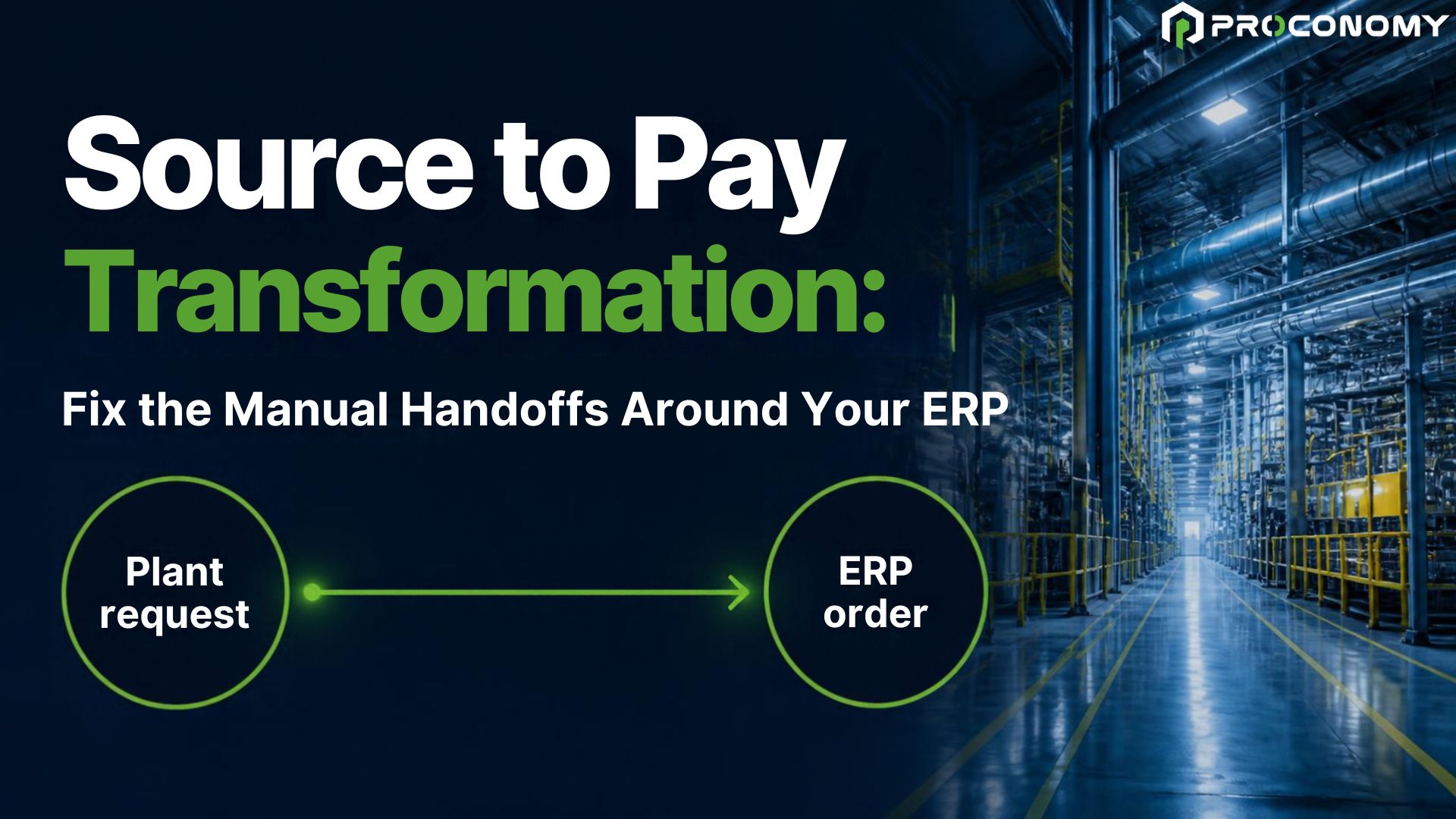
Source to Pay Transformation: Fix the Manual Handoffs Around Your ERP
Source to pay transformation often begins where ERP records stop: requests in email, supplier responses in attachments, approvals without context and exceptions nobody owns. A manufacturer can start with one high-friction workflow, set decision rights, connect approved outcomes to ERP and compare the result with its baseline. The Hackett Group projects an 8% increase in procurement workload in 2026 while headcount and operating budgets decline. That makes the time spent coordinating work a useful place to look for capacity.
.jpg)
How procurement runs
How Procurement Management Software Fixes the ERP Execution Gap
Procurement management software can add the execution layer that is often missing around SAP or Oracle without replacing the ERP. It can capture incomplete requests, coordinate sourcing and supplier activity, apply procurement policy, route human decisions, manage exceptions and write approved outcomes back to the system of record. This matters as procurement teams face rising demand with constrained resources. The Hackett Group projects that procurement workloads will increase by 8% this year, even as headcount and operating budgets decline.
AI in procurement
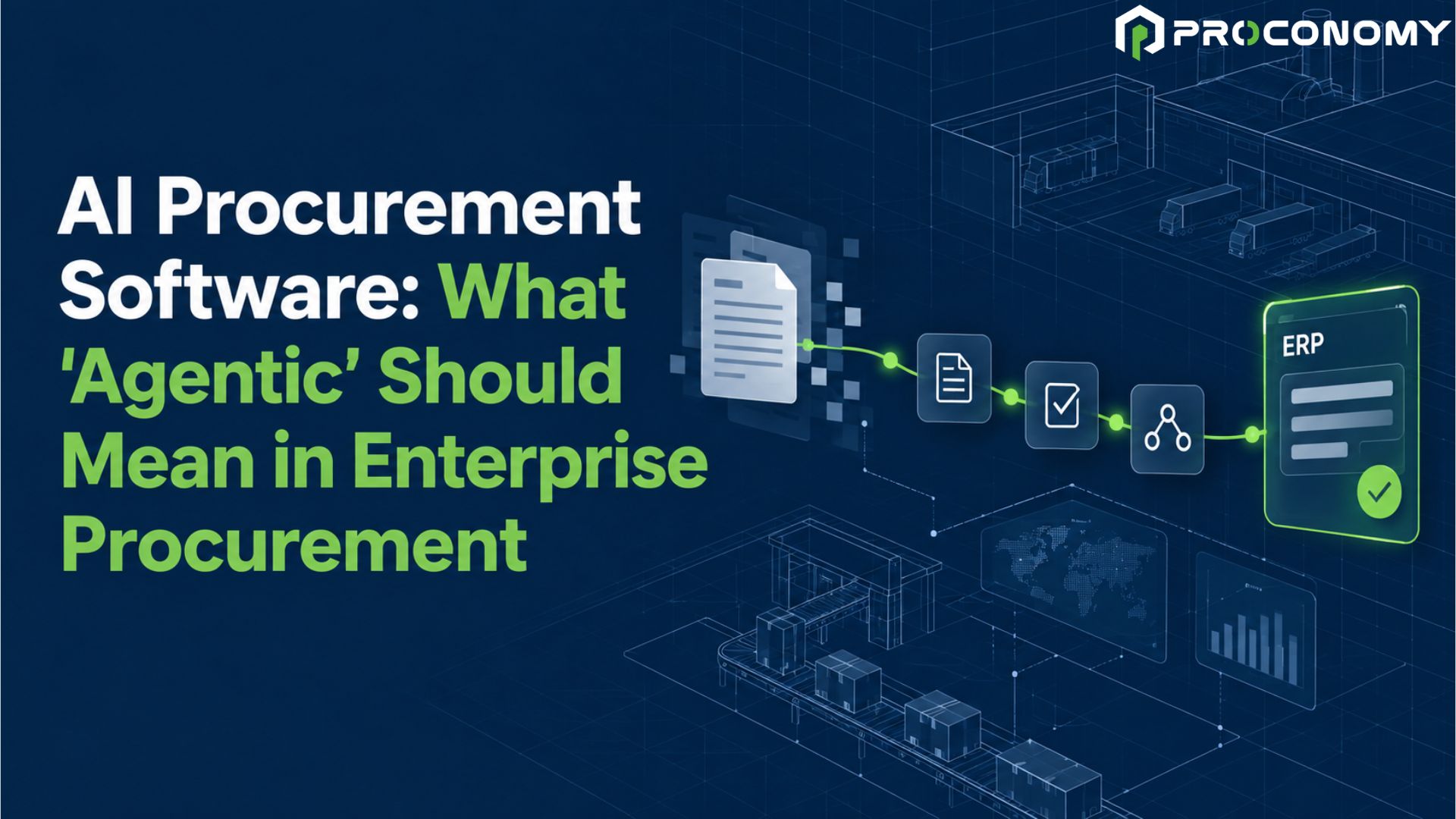
AI Procurement Software: What “Agentic” Should Mean in Enterprise Procurement
McKinsey found that almost 60% of source-to-pay activities have the potential to be fully or largely automated. However, Gartner predicts that more than 40% of agentic AI projects could be cancelled by the end of 2027 due to factors such as rising costs, inadequate controls and unclear business value. For complex manufacturers, the right model is not to replace ERP. ERP remains the system of record, while governed AI agents coordinate the work around it. People retain authority over critical decisions, exceptions return to the appropriate stakeholders, and every action remains traceable.
AI in procurement
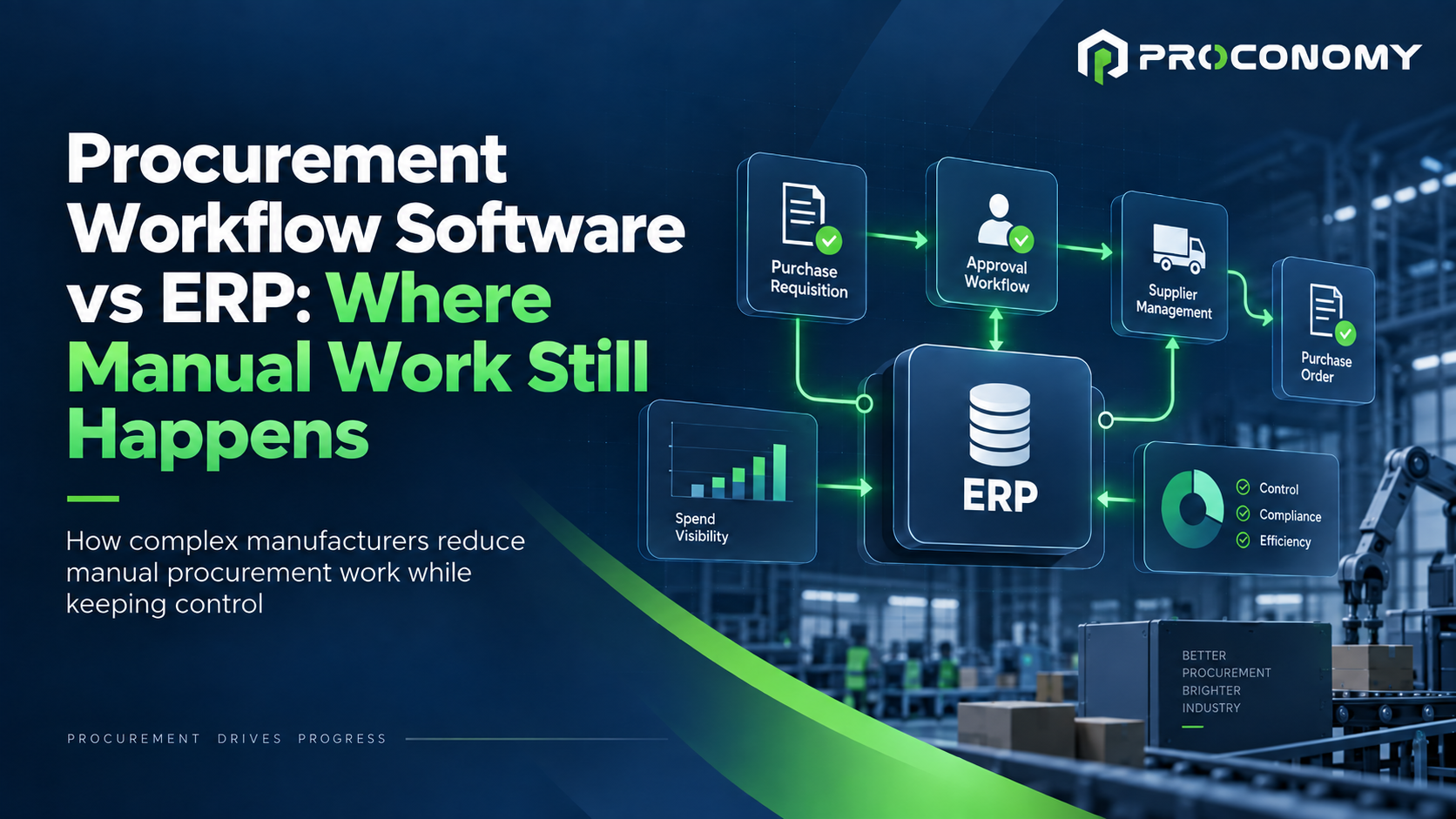
Procurement Workflow Software vs ERP: Where Manual Work Still Happens
A 2025 procurement survey found that 75% of business leaders struggle with manual procurement processes. This guide explains where ERP workflow ends, where procurement workflow software adds value, and how manufacturers can reduce manual coordination without replacing the ERP or weakening control.
source to pay
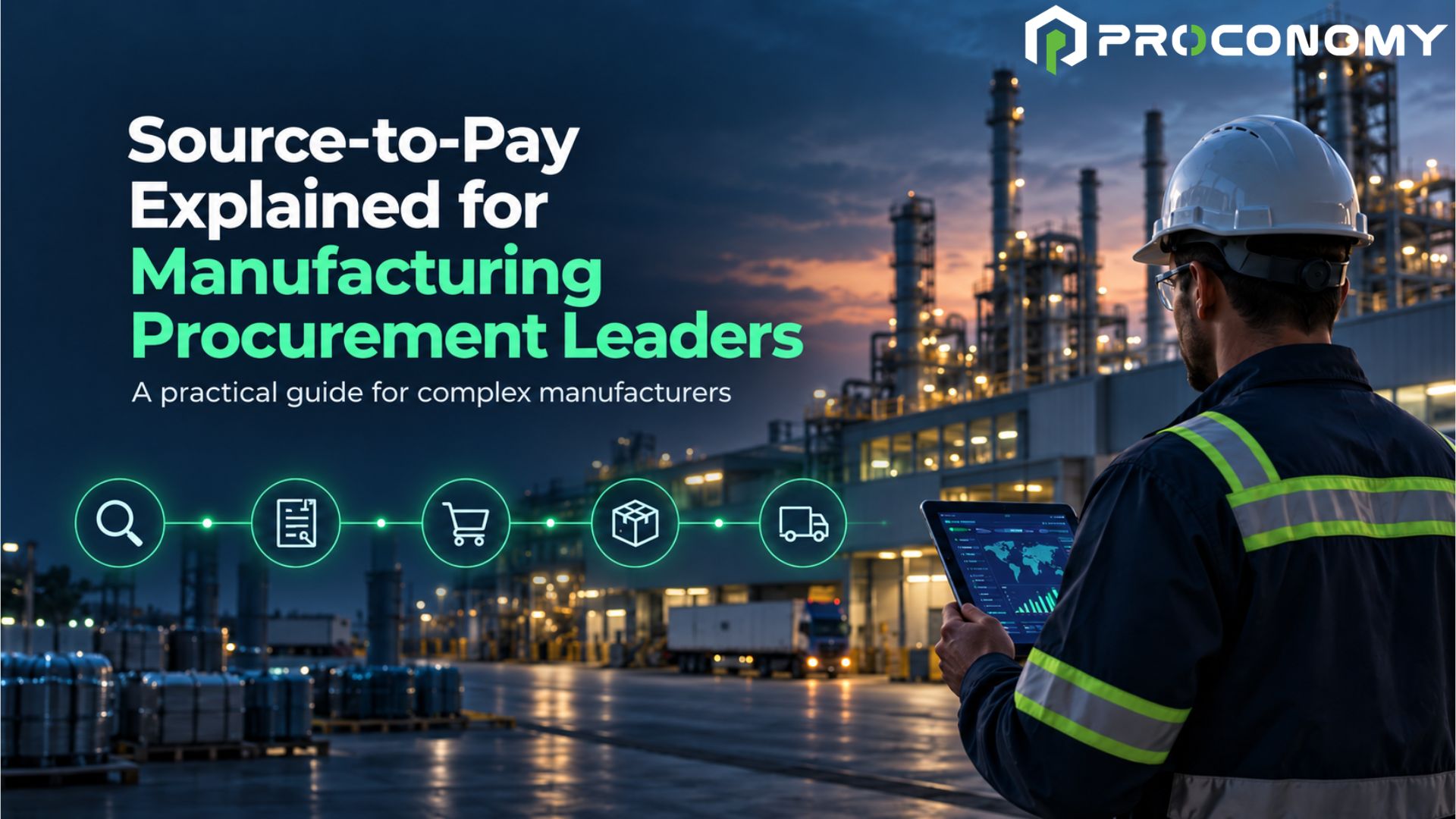
Source to Pay Explained for Manufacturing Procurement Leaders
A recent study found that manufacturing companies spend a median 6,186 hours annually on indirect-material procurement processes. Source-to-Pay can reduce this execution burden by connecting sourcing, supplier workflows, contracting, purchasing and ERP processes while keeping approvals and decision control with the right people.
.jpg)
Evaluation
Procurement Software for Complex Manufacturers: What to Look For
Procurement software for complex manufacturers should do more than digitise purchasing. It should execute authorised work across sourcing, contracts, suppliers and quality, while the ERP remains the system of record and people retain critical decisions. With agentic AI expected to improve procurement efficiency by 25–40%, selecting the right platform is increasingly important. This guide explains how to evaluate ERP integration, workflow execution, governance, exception handling, auditability and multi-plant scalability.
source to pay
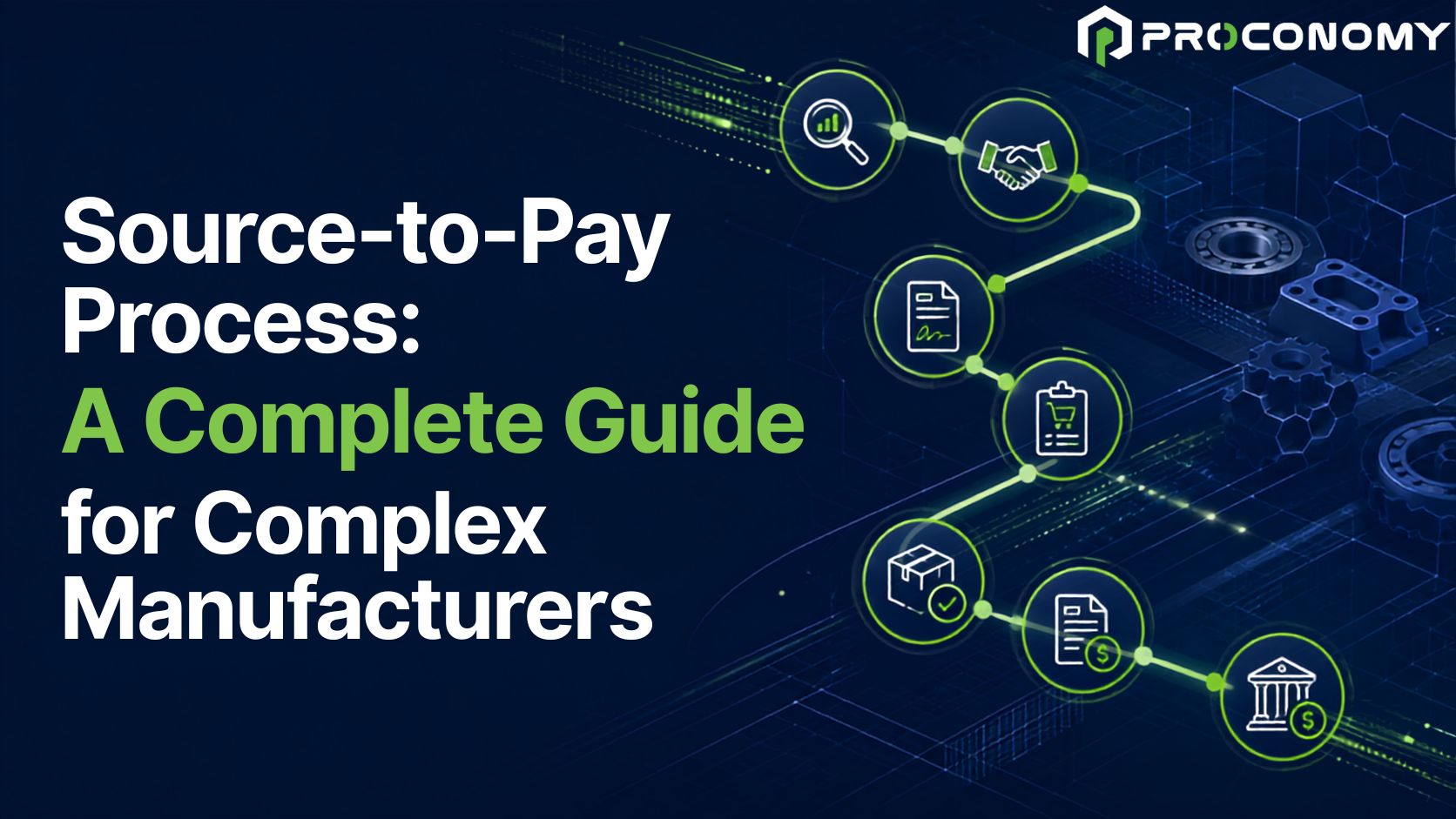
Source-to-Pay Process: A Complete Guide for Complex Manufacturers
A connected source-to-pay process helps manufacturers reduce delays, manual work and compliance gaps. McKinsey found that 56% of S2P tasks can be largely automated, increasing to 93% in payment processing, while process inefficiencies can consume 3–4% of external spend. The key is governed automation that moves routine work forward while keeping people in control of critical decisions.
Procurement
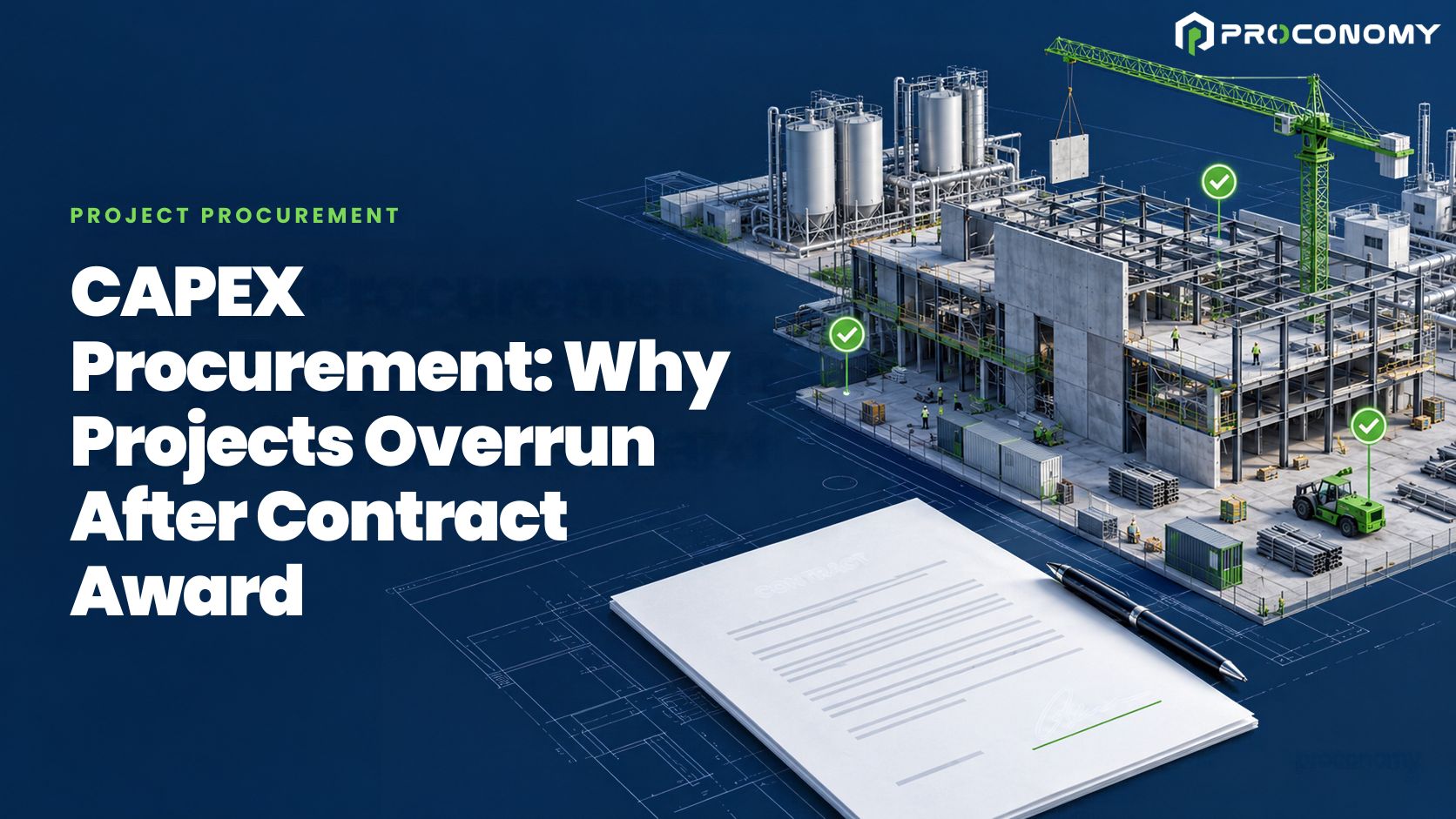
CAPEX Procurement: Why Projects Overrun After Contract Award
CAPEX procurement needs cost control beyond the contract award. McKinsey’s review of more than 300 billion-dollar-plus megaprojects reported average cost overruns of approximately 80%, a benchmark for very large projects rather than every plant investment. For manufacturers, practical controls include clear package scopes, qualified contractors, changes priced before work begins, current commitments and verified payment milestones. Connecting these decisions helps teams identify budget exposure before it becomes an invoice. A negotiated contract is only the beginning
AI in procurement
AI procurement agents versus copilots: the distinction that decides the business case
Copilots make each step faster for the person taking it. Agents remove steps from people entirely, within a permitted boundary. That difference determines whether procurement capacity is still limited by headcount.
Governance
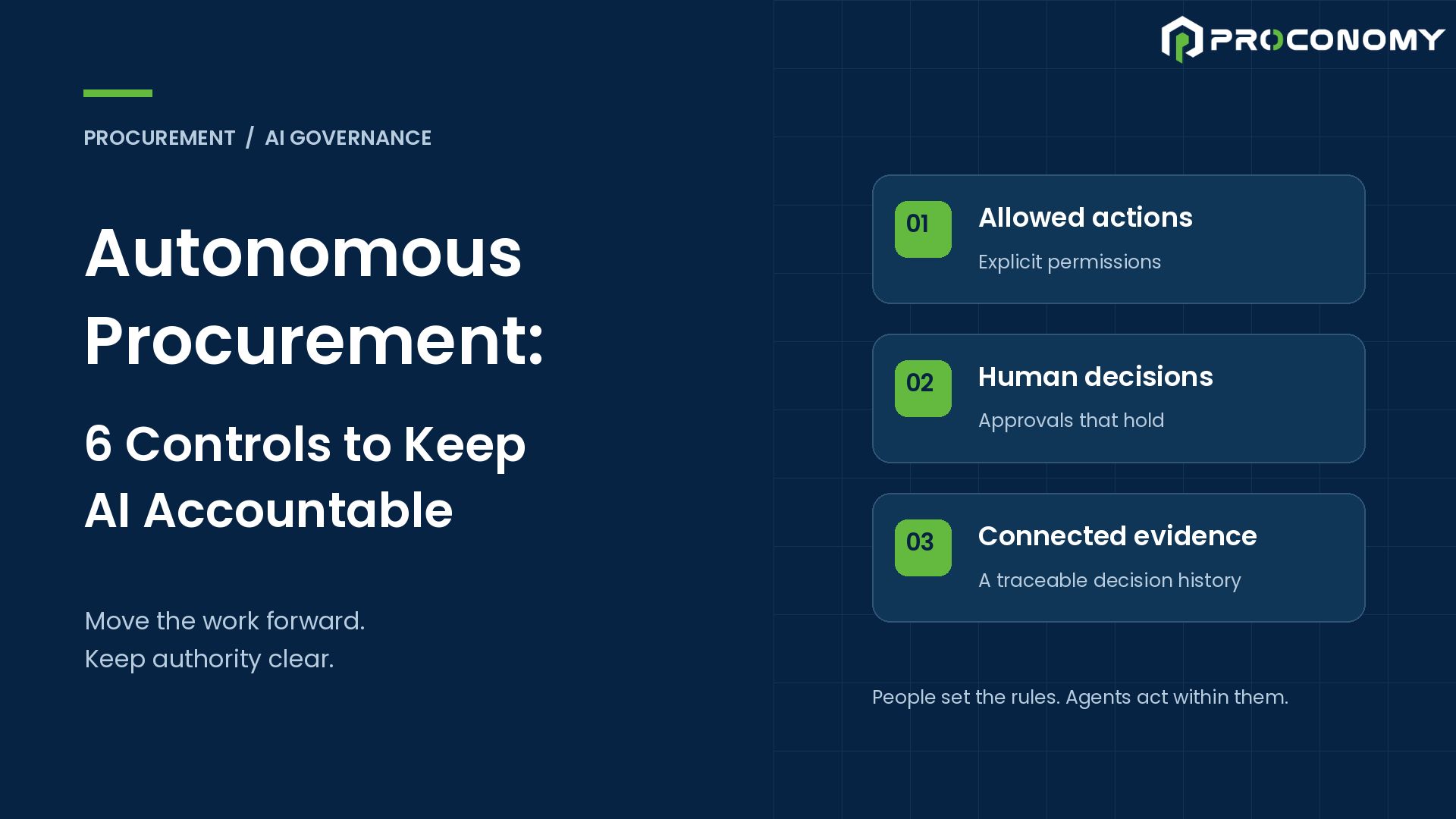
How to Govern Autonomous Procurement: 6 Controls to Keep AI Accountable
Autonomous procurement needs clear permissions, enforceable policies, human checkpoints and a decision history that can be reconstructed. In Deloitte’s 2025 Global CPO Survey, 64% of respondents prioritised greater supply chain visibility as a risk mitigation strategy. Start with a bounded workflow, test all six controls and expand authority using evidence from real operations. Speed, accountability and supplier context should improve together.
Measurement
How to measure what manual procurement coordination actually costs you
Manual coordination rarely appears in procurement reporting because it is spread across every workflow. Four measures — manual touches, cycle time by stage, first-time-complete rate and exception rate — make it visible.
Evaluation
What to demand in a demonstration before buying an autonomous procurement platform
A demonstration that only shows work succeeding has not shown you the governance. Six specific requests — using one of your own workflows — reveal whether execution and control are real.
How procurement runs
Why your ERP does not solve procurement execution
ERP systems record procurement transactions accurately. They do not perform the interpretation, routing, chasing and comparison that surrounds those transactions, which is where most procurement capacity is consumed.
See the model applied to your own workflow.
Articles explain the operating change. A demonstration on one of your processes shows it.
Someone from client success replies, not a sales sequence. If we are not a fit we will say so on the first call.
Not ready to talk to anyone?
Fair enough. Both of these work without giving us your email.